

Google Alerts is a decent starting point. We all set it up when we launched. But if you're a founder trying to find your first 100 customers, it's useless. Alerts are slow, they miss 90% of the conversations on Reddit and social media, and they can't tell the difference between a high-intent lead and a random blog comment.
At BillyBuzz, monitoring isn't a passive brand-tracking chore; it's our #1 outbound channel. It’s how we find people asking for solutions, complaining about competitors, and describing our exact use case. A 24-hour delay from Google Alerts means a competitor already closed that deal. Moving past Google was a necessity, because modern tools like AI brand monitoring find these opportunities in real-time.
This isn't just another list of Google Alerts alternatives. This is our internal playbook. We're sharing the exact tools we use, from free options to the AI platforms that drive our growth. I'll show you our actual alert rules, the subreddits we live in, and even the response templates that turn monitoring into a customer acquisition machine.
This is a founder-to-founder guide. No fluff. Just the tools and tactics to stop tracking mentions and start acquiring customers.
1. BillyBuzz
Best For: Founders and lean marketing teams who use Reddit to find customers.
We built BillyBuzz because we were wasting hours manually searching Reddit for people who needed our product. It's not a passive monitoring tool; it's a customer acquisition engine. Instead of you guessing keywords, our AI scans your website and competitors to find the subreddits and conversations where your customers are asking for help right now. It surfaces high-intent leads who are complaining about your competitors or looking for your exact solution.
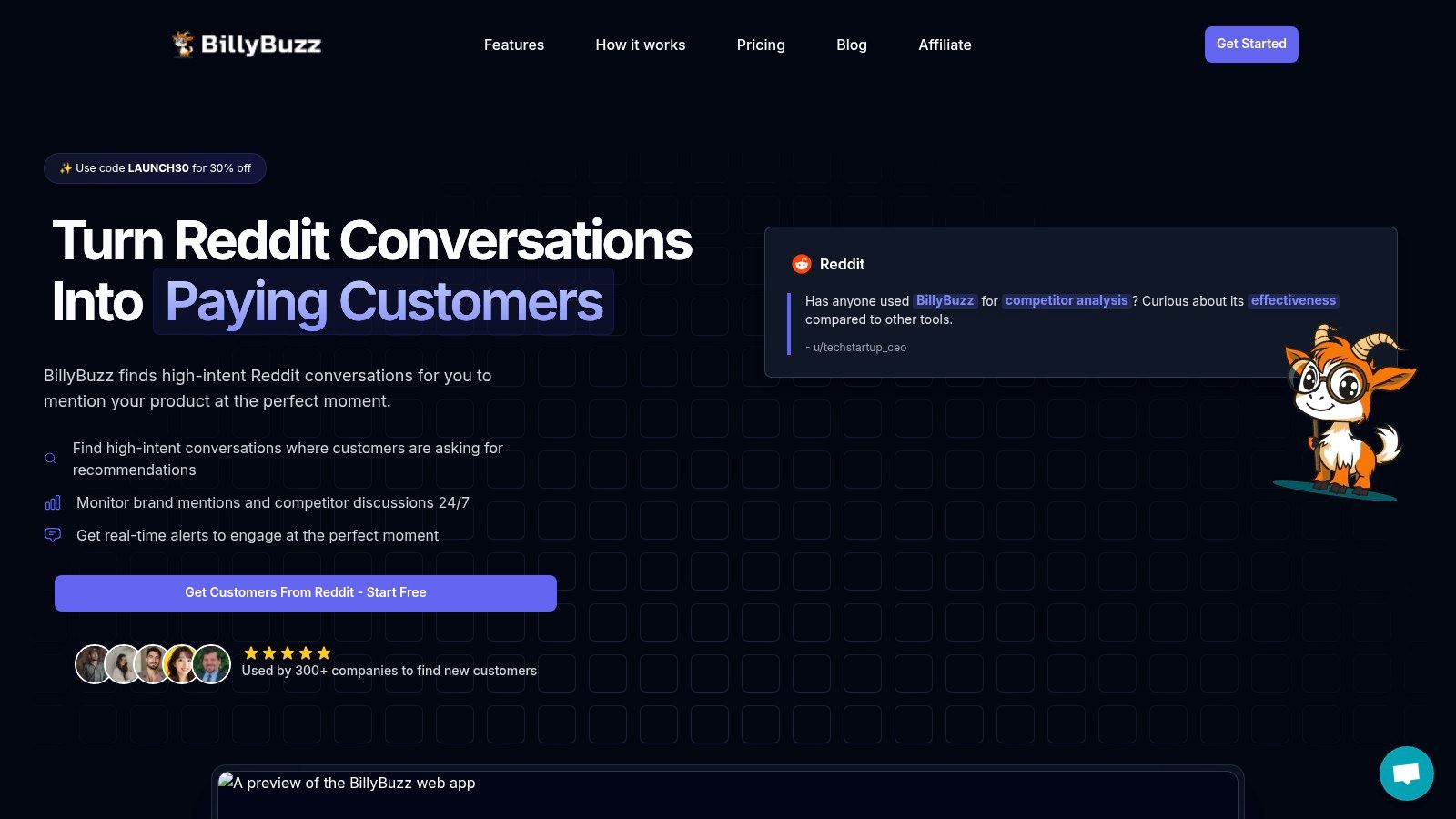
Speed is everything. We get near real-time alerts in a dedicated Slack channel, so we can be the first to respond. That's the whole game. The AI also gives us reply suggestions to speed things up, but the real magic is the SEO upside. A single helpful, non-spammy Reddit comment can rank on Google for months, turning one interaction into a long-term traffic source.
How We Use It Internally
Google Alerts is useless for Reddit. BillyBuzz is surgical. We filter for buying intent. Here are some of our actual alert rules:
- Keywords:
"customer feedback tool","NPS alternative","how to track user feedback","best tool for feature requests". - Competitor Mentions: We track mentions of competitors paired with negative words like
"frustrated with","hate","alternative to", or"too expensive". - Subreddits: We live in
r/SaaS,r/startups,r/ProductManagement,r/UXdesign. The AI finds others, but these are our core communities.
Our Slack alerts are our sales pipeline. A team member jumps on it, crafts a genuinely helpful (non-salesy) response, and logs the interaction. Here's a stripped-down version of our response template:
"Hey [username], saw you were struggling with [pain point]. We ran into that same issue when we were building [our previous project]. We ended up building a tool to solve it for ourselves by [unique feature]. Not sure if it's a fit, but might be worth a look if you're still stuck. Happy to answer questions either way."
This workflow is simple. You can integrate Reddit alerts directly into a dedicated Slack channel in about 10 minutes.
Pricing & Key Details
- Pricing: Tiered plans start with Starter (
$19/mo), Growth ($39/mo), and Scale (~$99/mo), with discounts for annual billing. A free trial and 30-day money-back guarantee are available. - Integrations: Email, Slack, and Discord.
- Focus: Reddit-only.
| Feature | BillyBuzz | Google Alerts |
|---|---|---|
| Primary Platform | Web, News, Blogs | |
| Relevancy Engine | AI Context-Aware | Keyword Match |
| Real-Time Alerts | ✅ (Slack, Discord, Email) | ❌ (Delayed digests) |
| AI Reply Assist | ✅ | ❌ |
| SEO Upside | High (ranks on Google) | Low |
Pros:
- AI finds high-intent leads you'd otherwise miss.
- Real-time alerts via Slack mean you're first to respond.
- Drives long-term organic traffic from ranked Reddit replies.
- Built by founders, for founders.
Cons:
- It's a Reddit-only tool.
- You still need a human to write authentic, helpful replies. Don't spam.
Website: https://www.billybuzz.com
2. Talkwalker Alerts
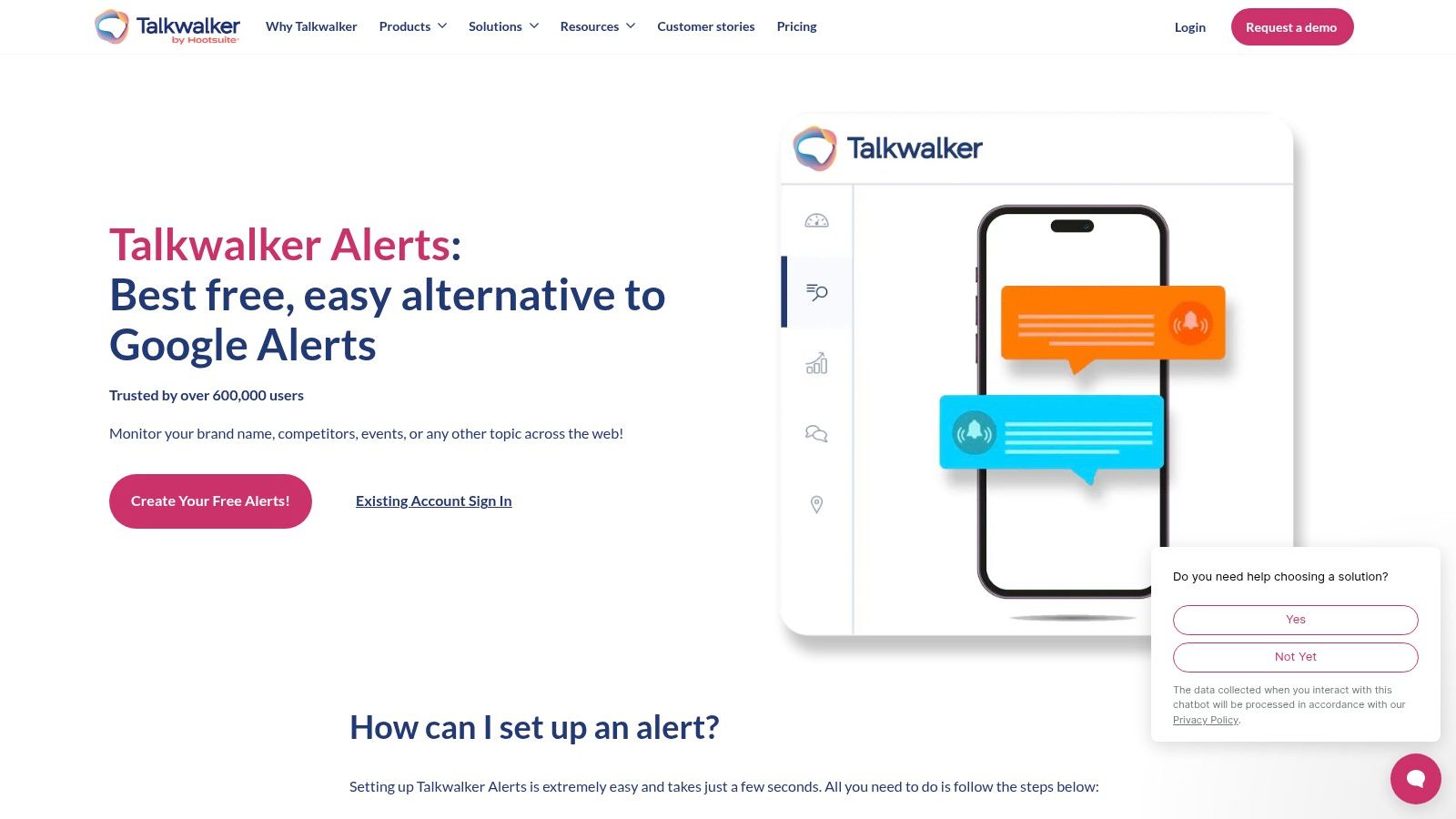
Talkwalker Alerts is the simplest, most direct replacement for Google Alerts. It's free, it includes Twitter/X, and it actually works. This is the first tool we recommend to founders who just need something more reliable than Google without paying for a big platform.
The setup takes 30 seconds: enter your keyword, pick your sources (news, blogs, forums, Twitter/X), choose a language and frequency, and you're done. No Google account needed.
Core Features & Use Case
We use Talkwalker as a free safety net. We have one alert set up for our brand name, "BillyBuzz," with the frequency set to "as-it-happens" and the filter on "only the best results." It catches major press mentions and keeps our inbox from getting flooded. Think of it as a smoke detector.
- Best For: Anyone needing a free, reliable upgrade from Google Alerts that covers basic social media.
- Pricing: 100% free.
- Unique Offering: Free Twitter/X monitoring. Google Alerts doesn't touch it.
Our Take: If Google Alerts is failing you, switch to this. It takes two minutes and is an immediate improvement, especially with Twitter/X data included.
Pros and Cons
- Pros: It's actually free, dead simple to use, and includes Twitter/X.
- Cons: No analytics, no dashboard, no advanced search. It's a basic email alert system.
This is a great first step, but to really leverage mentions, you need to explore advanced social media monitoring techniques that turn data into strategy.
Learn more at: https://www.talkwalker.com/alerts
3. Mention
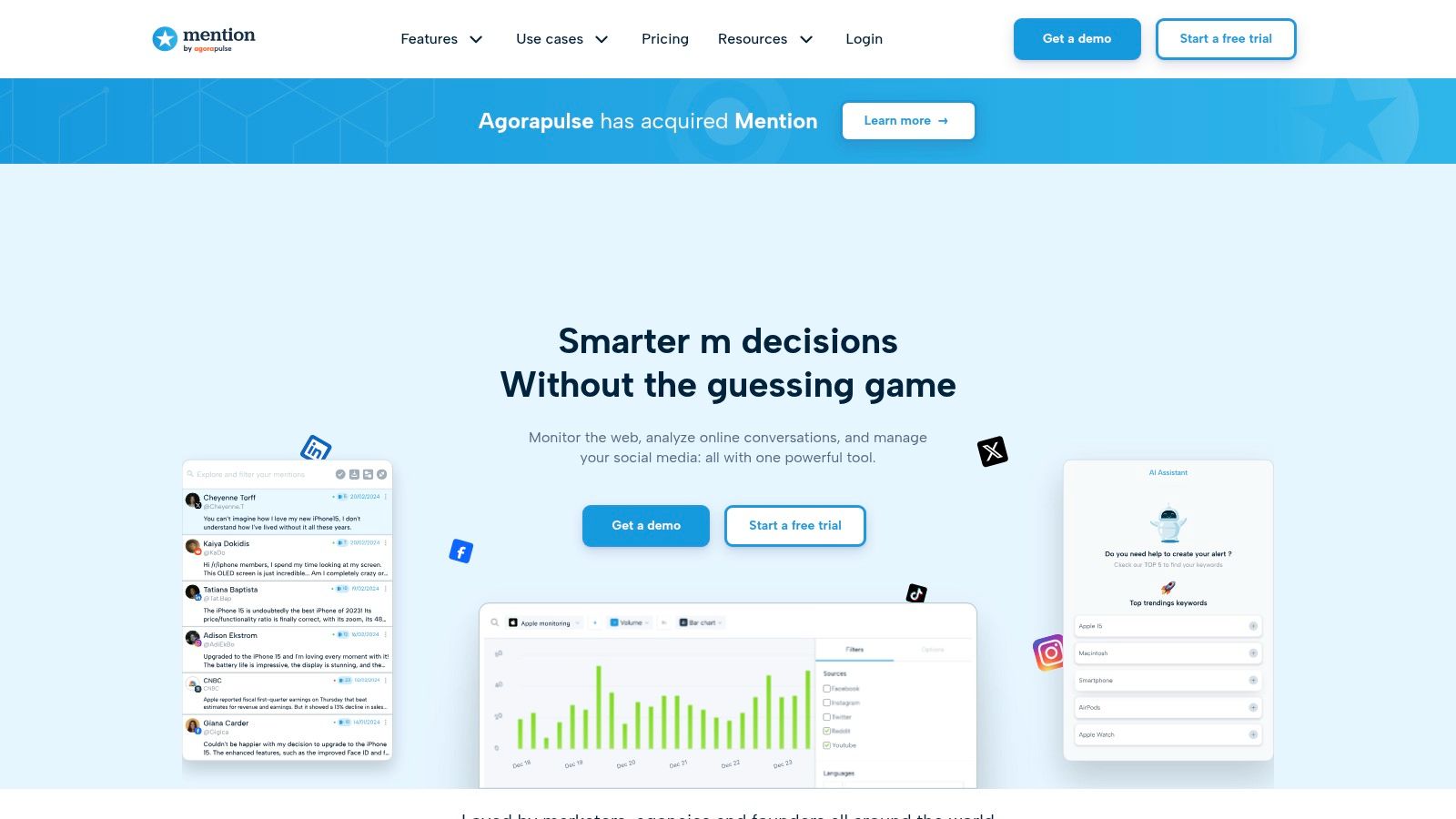
Mention is the first serious step up from free tools. It's a proper media monitoring platform for teams who need to track conversations across social networks, news, forums, and review sites in real time. It's not just about alerts; it's about seeing trends, measuring sentiment, and collaborating on responses.
The dashboard gives you analytics on your brand health, which is great for reporting to investors or stakeholders. It's built for marketing teams who need to manage brand reputation systematically.
Core Features & Use Case
We use Mention for competitor intelligence. We have a Boolean query set up: ("competitor A" OR "competitor B") AND ("new feature" OR "funding" OR "pricing change"). This filters out the noise and gives us pure strategic intel. We pipe these alerts into a #competitors Slack channel for immediate team discussion.
- Best For: Marketing teams that have outgrown free alerts and need a central hub for monitoring, analytics, and collaboration.
- Pricing: Paid plans start at $49/month.
- Unique Offering: A solid mix of broad source coverage (including Instagram) with team collaboration tools and reporting.
Our Take: Mention is the right move when you're ready to get serious about brand management. It's one of the most accessible yet powerful Google Alerts alternatives for managing reputation and competitive intel.
Pros and Cons
- Pros: Great source coverage, powerful Boolean search, and built-in analytics for reporting.
- Cons: The price jump from free can be steep for solo founders, and the best features are on the more expensive plans.
Gathering data is half the battle. The next step is turning it into a PR opportunity.
Learn more at: https://mention.com
4. BrandMentions
BrandMentions hits the sweet spot between affordability and functionality, making it a great option for small businesses and agencies. It gives you a dedicated dashboard with analytics, sentiment analysis, and broad coverage across the web, news, and major social platforms. The pricing is transparent, so you know exactly what you're getting.
It’s easy to set up projects for your brand, competitors, or industry keywords and then visualize the data in clean reports that you can actually share with people.
Core Features & Use Case
We use BrandMentions for our monthly competitive intelligence reports. We have a project tracking our top three competitors, with a daily email digest. This lets our marketing team see their PR wins and customer sentiment in a single report, without creating more noise in Slack. The white-label reports are clutch for our monthly board updates.
- Best For: SMBs and marketing agencies needing solid analytics and reporting without an enterprise price tag.
- Pricing: Starts at $99/month for the "Growing Business" plan.
- Unique Offering: White-label PDF reports on higher tiers, which is perfect for agencies reporting to clients.
Our Take: BrandMentions is what you buy when you need to prove the ROI of your marketing. It moves past simple notifications and gives you the data you need for strategic analysis.
Pros and Cons
- Pros: Transparent pricing, useful white-label reporting, and hourly updates on higher plans.
- Cons: The mention limits on lower plans can be tight, and it lacks the deep integrations of enterprise tools.
If you want a powerful but straightforward Google Alerts alternative that delivers clean, actionable data, this is a solid choice.
Learn more at: https://brandmentions.com
5. Awario
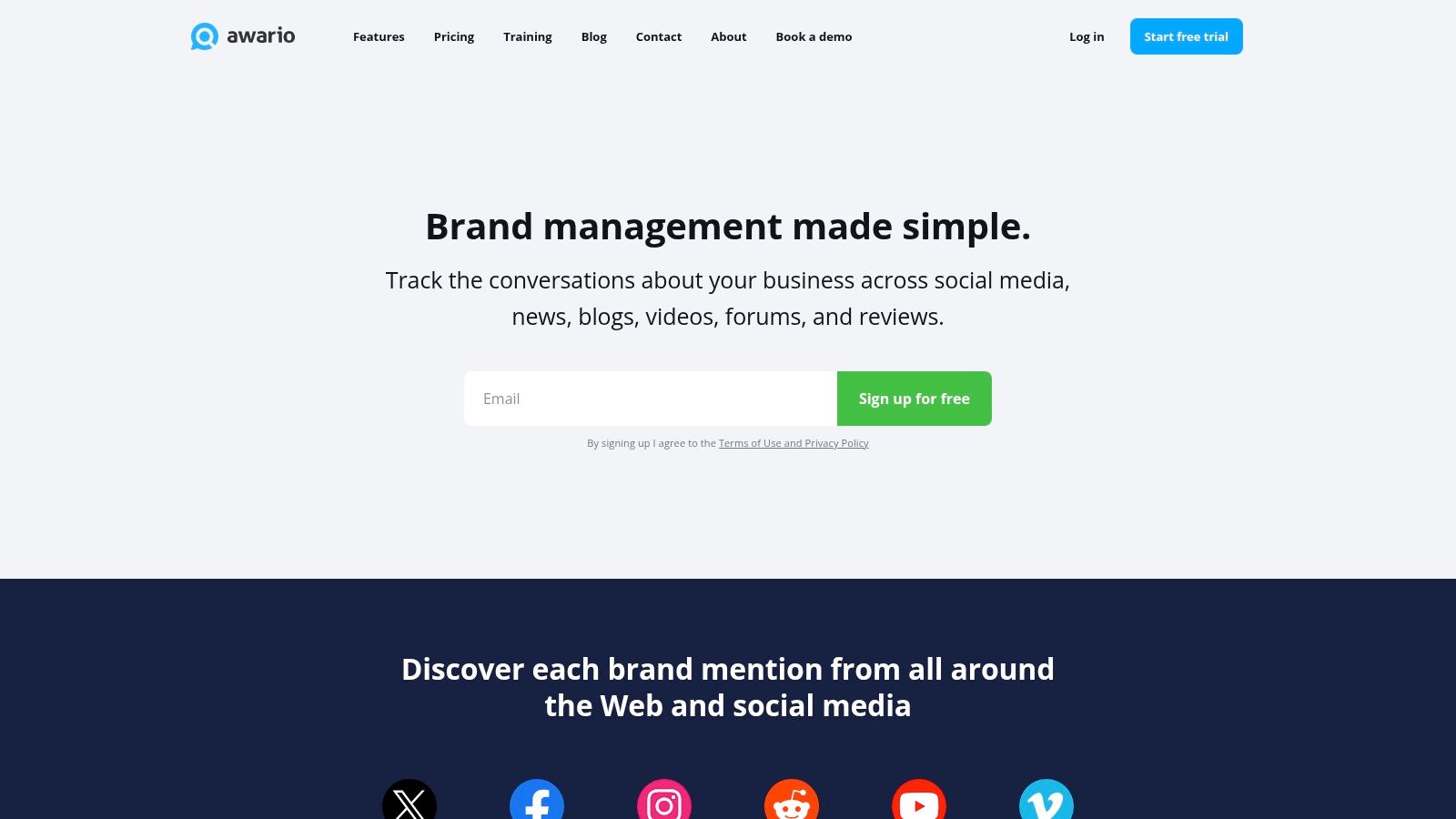
Awario is for founders who need more control. Its killer feature is an accessible but powerful Boolean search. This lets you move beyond simple keyword tracking and pinpoint specific conversations. You can track your brand name while excluding job postings, or hunt for leads by searching for complaints about your competitors. It's a fantastic Google Alerts alternative for startups that need granular control without the enterprise cost.
You can build detailed queries to find exactly what you're looking for and filter out the rest.
Core Features & Use Case
We use Awario's Boolean search to find "problem" keywords in our industry. An alert like ("frustrated with" OR "hate my" OR "is so slow") AND "content workflow" helps us find potential customers describing a pain point we solve. Filtering by negative sentiment for these searches is a huge time-saver.
- Best For: Startups that need powerful, targeted monitoring and reporting without a massive budget.
- Pricing: Starts at $39/month for the Starter plan. A free trial is available.
- Unique Offering: Advanced Boolean search at a very competitive price point.
Our Take: Awario is the tool that turns monitoring from a passive chore into an active lead gen machine. The Boolean logic is a game-changer.
Pros and Cons
- Pros: Flexible and powerful search, clean interface, and great value for the features.
- Cons: Historical data is capped on lower plans, and it doesn't have the broad media coverage of enterprise tools.
Learn more at: https://awario.com
6. BuzzSumo (Alerts)
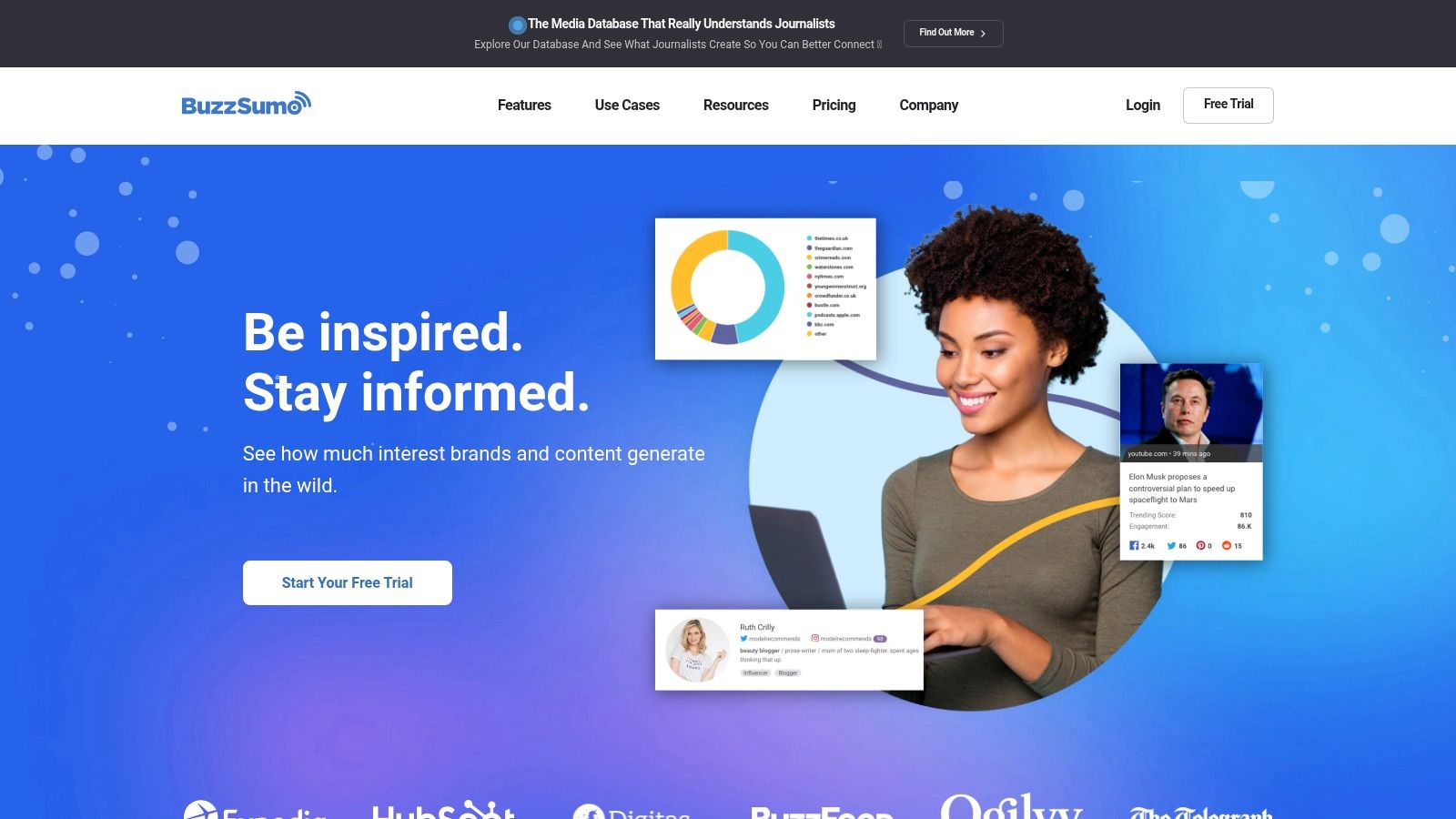
BuzzSumo is a content and PR machine, and its Alerts feature makes it a strategic Google Alerts alternative. It doesn't just find mentions; it connects them to content and influencers. It's built for teams that need to monitor new content from competitors, backlinks, and specific journalists.
This is perfect for a content-led PR strategy. You can get an alert when a key journalist publishes a new article or when a target publication links to a competitor, giving you a real-time window for outreach.
Core Features & Use Case
We use BuzzSumo Alerts for link-building and PR. We've set up alerts for journalists who cover our space and for our competitors' domains. When a journalist publishes a relevant piece or a competitor gets a new backlink, the alert hits our marketing Slack channel. It creates an immediate outreach opportunity.
- Best For: Content and PR teams that need to tie monitoring directly to their outreach strategy.
- Pricing: Alerts are part of the core plans, starting at $199/month.
- Unique Offering: The ability to set up alerts for specific journalists, not just keywords.
Our Take: If your goal is to get press and build high-quality backlinks, BuzzSumo is the best tool for the job. It turns passive listening into proactive, content-driven engagement.
Pros and Cons
- Pros: Amazing for PR and content teams, strong journalist and backlink monitoring, and a great Slack integration.
- Cons: It's expensive. This is a serious investment compared to basic tools.
Using these alerts to build out your media relations strategy can be a game-changer.
Learn more at: https://buzzsumo.com
7. Ahrefs Alerts
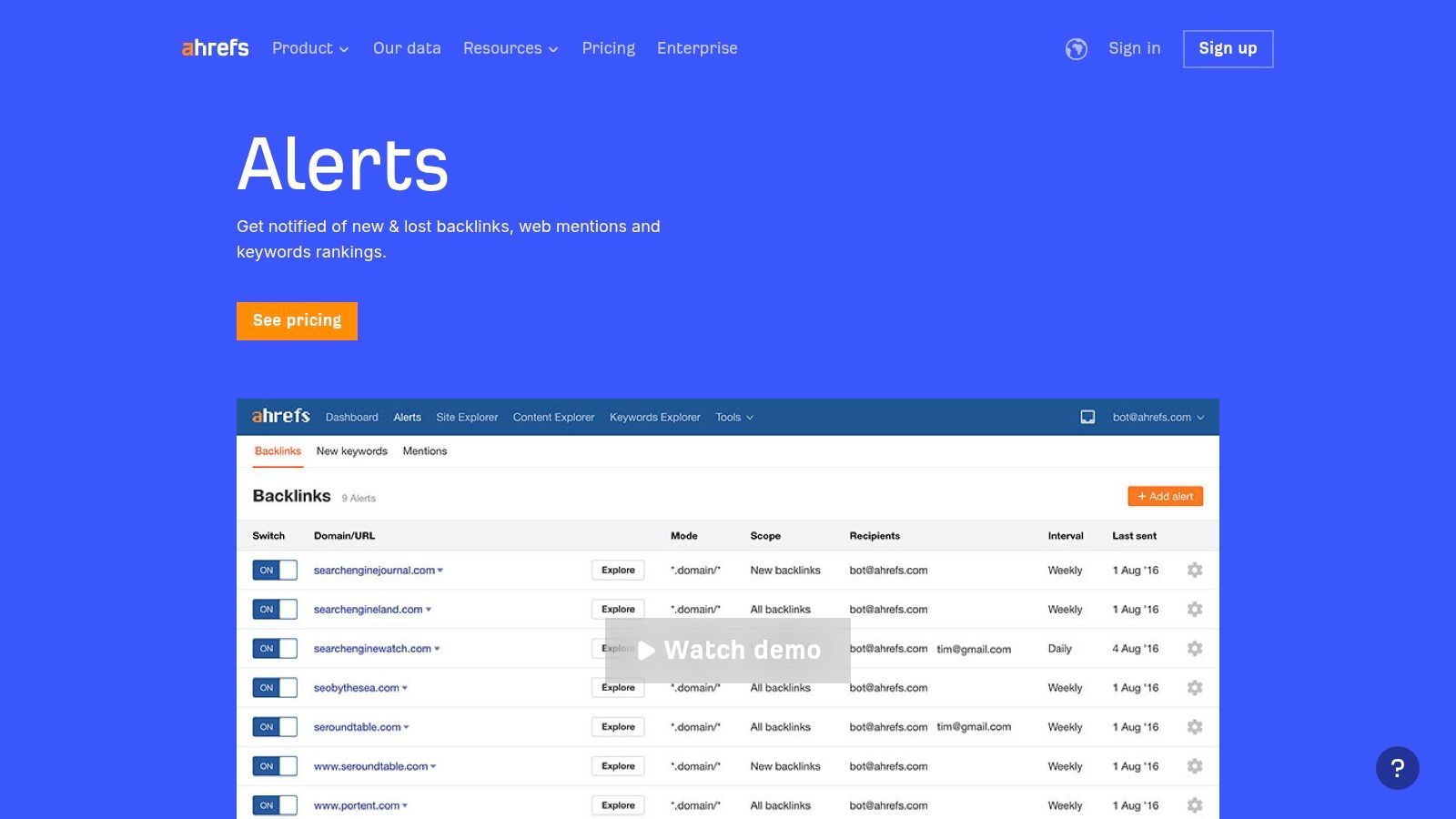
Ahrefs Alerts is part of the Ahrefs SEO suite, which makes it one of the best Google Alerts alternatives for teams that live and breathe SEO. It tracks web mentions, new and lost backlinks, and keyword ranking changes, giving you a full picture of your brand's digital footprint from both a PR and SEO perspective.
Instead of just telling you who mentioned your brand, Ahrefs shows you the SEO value of that mention, including the linking domain's authority. This context is critical for prioritizing outreach.
Core Features & Use Case
We use Ahrefs Alerts for competitive SEO intelligence. We have alerts set up for our main competitors' domains to notify us the moment they get a new backlink. This lets us see their PR and link-building strategy in real-time and find new outreach opportunities for ourselves.
- Best For: SEO teams who need to connect brand mentions and link building directly to search performance.
- Pricing: Included with an Ahrefs subscription, which starts at $99/month. No standalone alerts plan.
- Unique Offering: Direct integration of mention monitoring with deep backlink data and SEO metrics.
Our Take: If you're already paying for Ahrefs, using its alerts is a no-brainer. It turns brand monitoring into a strategic SEO activity.
Pros and Cons
- Pros: Combines PR and SEO monitoring in one tool, provides crucial data on backlink quality, and tracks competitor rankings.
- Cons: Only available as part of a paid Ahrefs subscription. Not for simple monitoring. Lacks social media coverage.
Learn more at: https://ahrefs.com/alerts
8. Semrush Brand Monitoring (App Center)
If your team is already deep in the Semrush ecosystem, the Brand Monitoring app is a convenient add-on. It uses Semrush’s crawlers to track brand, keyword, and backlink mentions across news and blogs. The main benefit is workflow efficiency—you can monitor your brand's reputation right next to your SEO and PPC data.
You set it up in the Semrush App Center. While it requires a Semrush subscription plus an extra fee, the 7-day trial lets you see if it's worth it.
Core Features & Use Case
We use the Semrush Brand Monitoring app to find unlinked brand mentions—a goldmine for link-building. We have an alert for "BillyBuzz" that filters for mentions without a link back to our site. This generates a targeted outreach list right inside the platform where we're already managing our other SEO tasks.
- Best For: Marketing teams who are heavy Semrush users and want to keep their tools consolidated.
- Pricing: Requires a Semrush subscription (from $129.95/mo) plus an app fee (around $19.99/mo).
- Unique Offering: Seamless integration into the Semrush suite, connecting brand monitoring with SEO analysis.
Our Take: If your team lives in Semrush, this app makes sense. It simplifies your workflow by keeping reputation and SEO under one roof.
Pros and Cons
- Pros: Convenient for Semrush users, great for finding unlinked mentions, and has a 7-day trial.
- Cons: It's an extra cost on top of an already expensive subscription, and its social coverage isn't as good as dedicated tools.
This is a great way to turn brand mentions into SEO results, a key part of our guide to building a brand from scratch.
Learn more at: https://www.semrush.com/apps/
9. Brandwatch Consumer Research
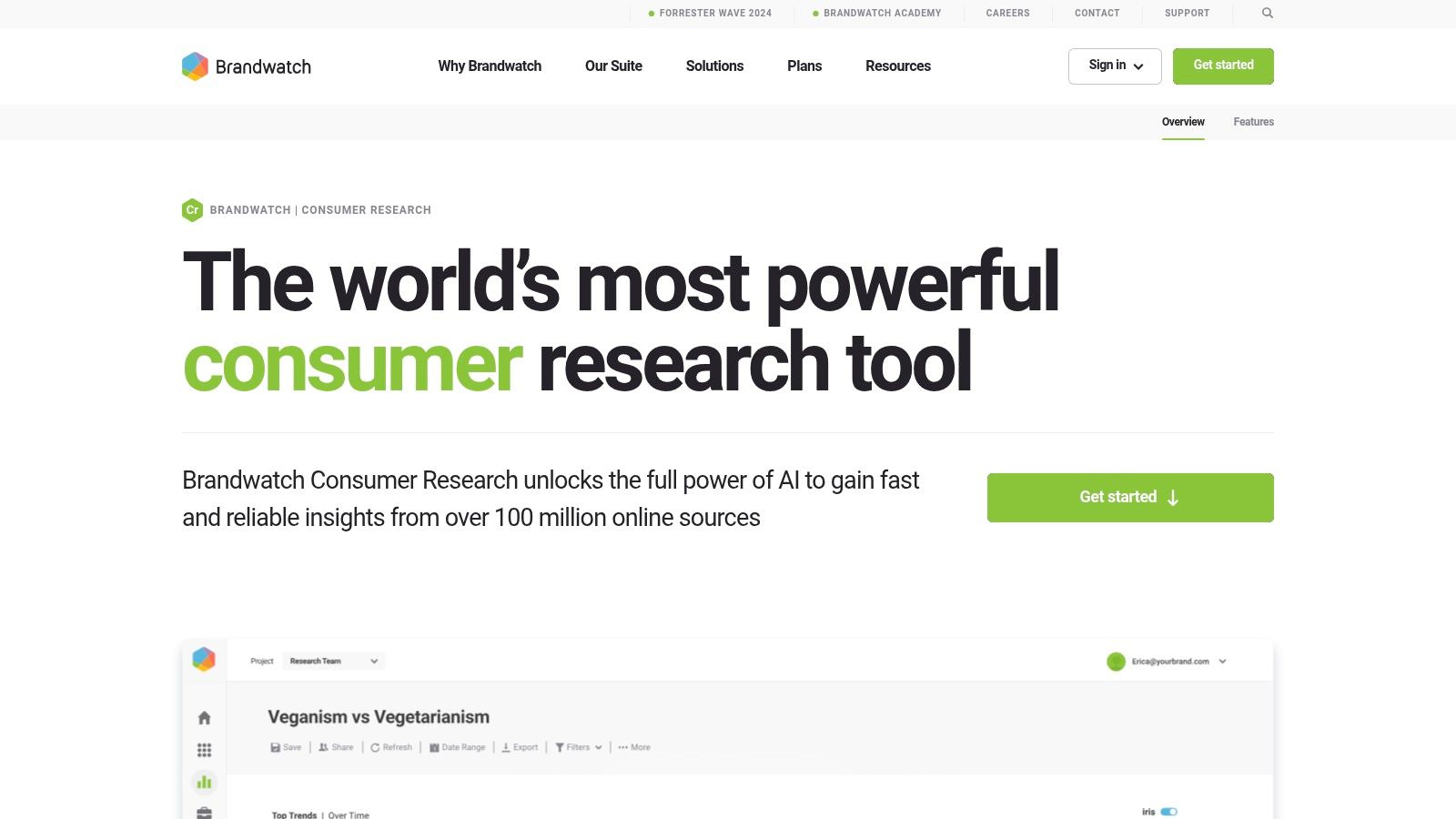
Brandwatch is the enterprise tier. This isn't just about keyword alerts; it's a sophisticated suite of social listening and consumer intelligence tools. It taps into massive datasets, including full data firehoses from major social networks and comprehensive Reddit coverage. It's built for global brands that need complex, multi-layered monitoring.
It's designed to identify trends, sentiment shifts, and influencer activity with incredible precision. Alerts can be set to trigger based on spikes in conversation volume, which is critical for crisis management.
Core Features & Use Case
We don't use Brandwatch—it's overkill for us—but we've seen larger partners use it for market intelligence. They set up alerts to flag any negative sentiment spikes around their brand in key markets, routing them directly to regional PR teams for immediate action.
- Best For: Large enterprises needing deep consumer intelligence, crisis management, and competitive analysis.
- Pricing: Quote-based enterprise plans. Expect a significant investment.
- Unique Offering: Access to a huge historical data archive and advanced AI features like image and logo detection.
Our Take: Brandwatch is incredibly powerful, but it’s like using a sledgehammer to crack a nut for most startups. It's the right choice when you need comprehensive consumer and market intelligence, not just mention alerts.
Pros and Cons
- Pros: Unmatched data depth, powerful AI-driven analytics, and robust team collaboration features.
- Cons: Very expensive and has a steep learning curve.
Most startups don't need this level of power, but it's good to know what's possible.
Learn more at: https://www.brandwatch.com/products/consumer-research/
10. Meltwater
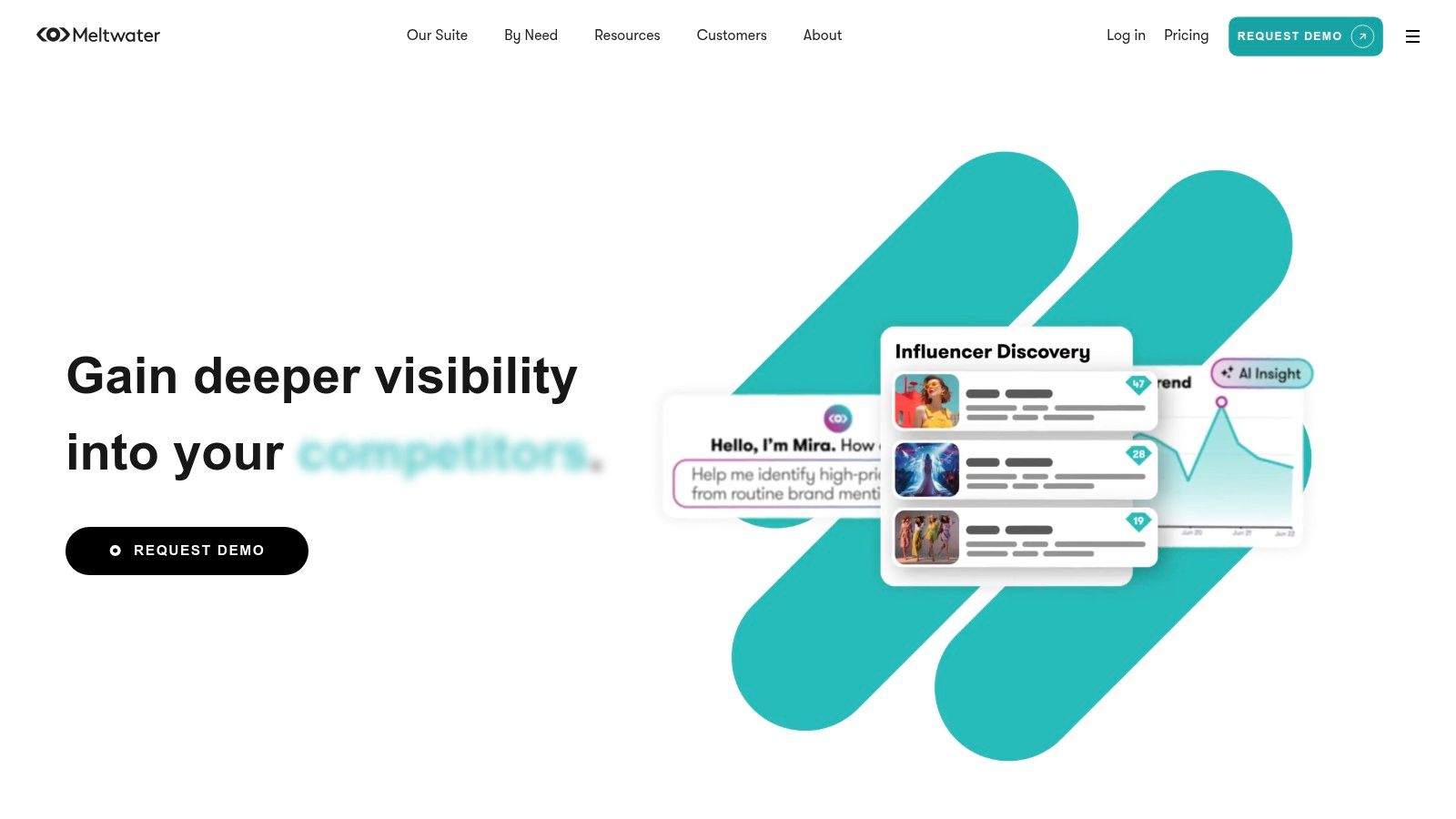
Meltwater is another enterprise-grade platform that offers one of the most comprehensive monitoring suites available. It goes beyond web and social to include broadcast (TV/radio), print media, and podcasts. This is for large organizations that need a complete 360-degree view of their brand presence.
It’s built for deep analytics, providing sophisticated dashboards and competitor benchmarking. Its power is in consolidating all media types into a single intelligence hub.
Core Features & Use Case
We don't use Meltwater, but we've seen clients use it to track the impact of major PR campaigns across TV and print, measure share of voice against public competitors, and provide executive-level reports on brand health. The real-time TV and radio alerts are critical for crisis management.
- Best For: Large enterprises and PR agencies needing all-in-one monitoring of online, social, print, and broadcast media.
- Pricing: Custom quote-based pricing, typically requires an annual contract.
- Unique Offering: Integrated monitoring of traditional broadcast (TV/radio) and print media.
Our Take: Meltwater is in a different league. It’s not an alert service; it's a full media intelligence command center for organizations where a mention on the evening news matters as much as a viral tweet.
Pros and Cons
- Pros: The broadest source coverage available, robust analytics, and dedicated account management.
- Cons: Opaque and high pricing, a significant learning curve, and overkill for most startups.
For most of us, a tool focused on digital channels with transparent pricing is a better fit.
Learn more at: https://www.meltwater.com
11. Sprout Social (with Listening/Monitoring)
Sprout Social is a social media management platform, not a dedicated monitoring tool. But if your main concern is managing brand reputation on social channels, it’s a great integrated alternative. It brings keyword monitoring into the same place where you handle scheduling and engagement.
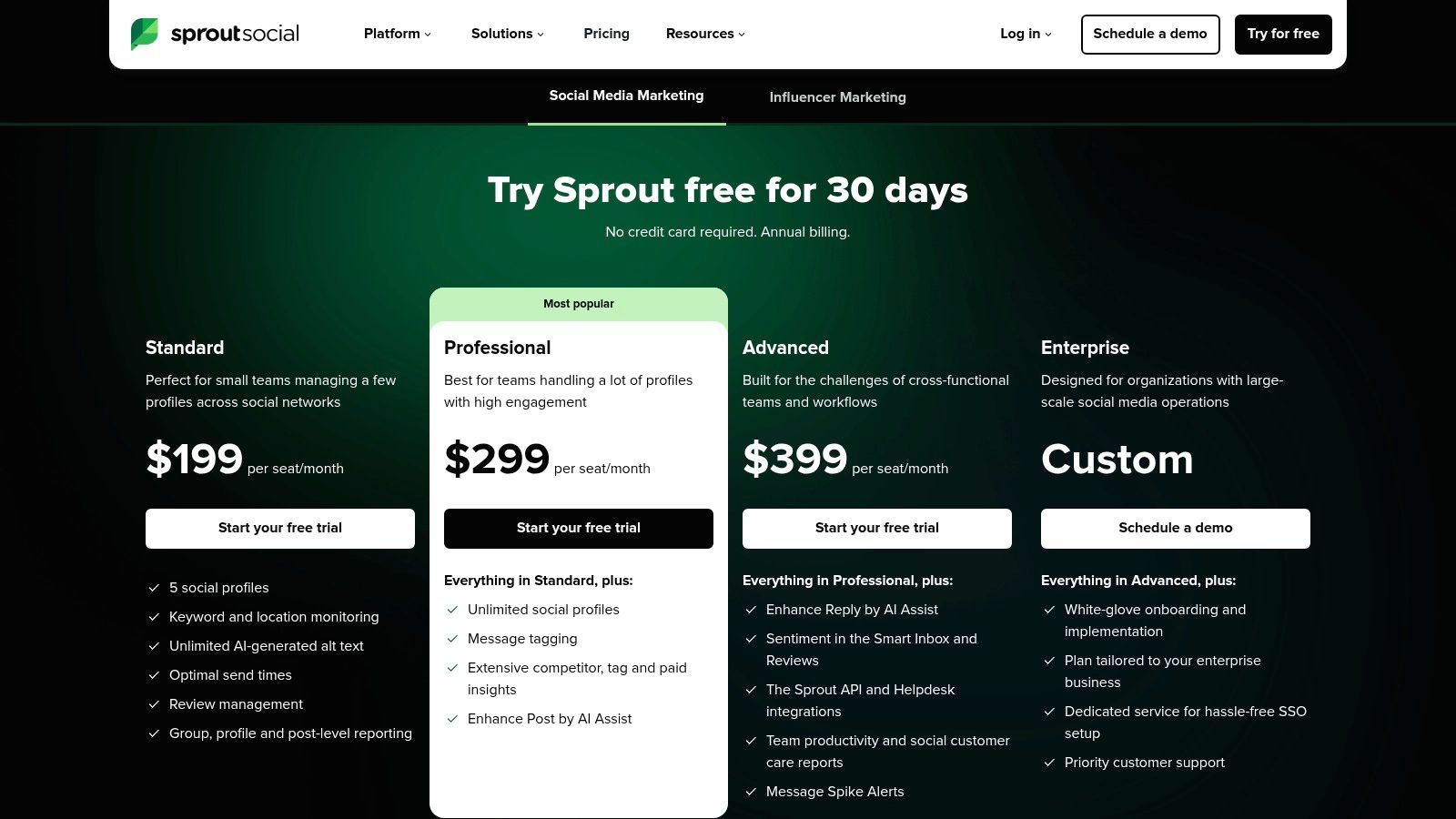
This is for teams that want to consolidate their social media tools. It offers solid keyword monitoring in its standard plans, with advanced listening available as an add-on.
Core Features & Use Case
We don't use Sprout for our web monitoring, but a social-heavy team could set up a keyword monitor for "customer service issue" alongside their brand name, routing all mentions to a unified inbox for the support team to handle instantly.
- Best For: Marketing and support teams who want monitoring integrated into their social media workflow.
- Pricing: Plans start at $249 per user/month (billed annually). Advanced listening is a separate add-on.
- Unique Offering: A unified Smart Inbox that combines mentions, messages, and comments into a single, actionable stream.
Our Take: If your team lives on social media, Sprout is a powerful all-in-one solution. It's less of a direct Google Alerts replacement and more of a complete social command center.
Pros and Cons
- Pros: Combines publishing, analytics, and monitoring in one platform, powerful unified inbox, and great support.
- Cons: Per-seat pricing gets expensive fast, and its focus is social media, not the broader web.
Learn more at: https://sproutsocial.com/pricing/
12. Feedly (Pro/Pro+ and Market Intelligence with Leo AI)
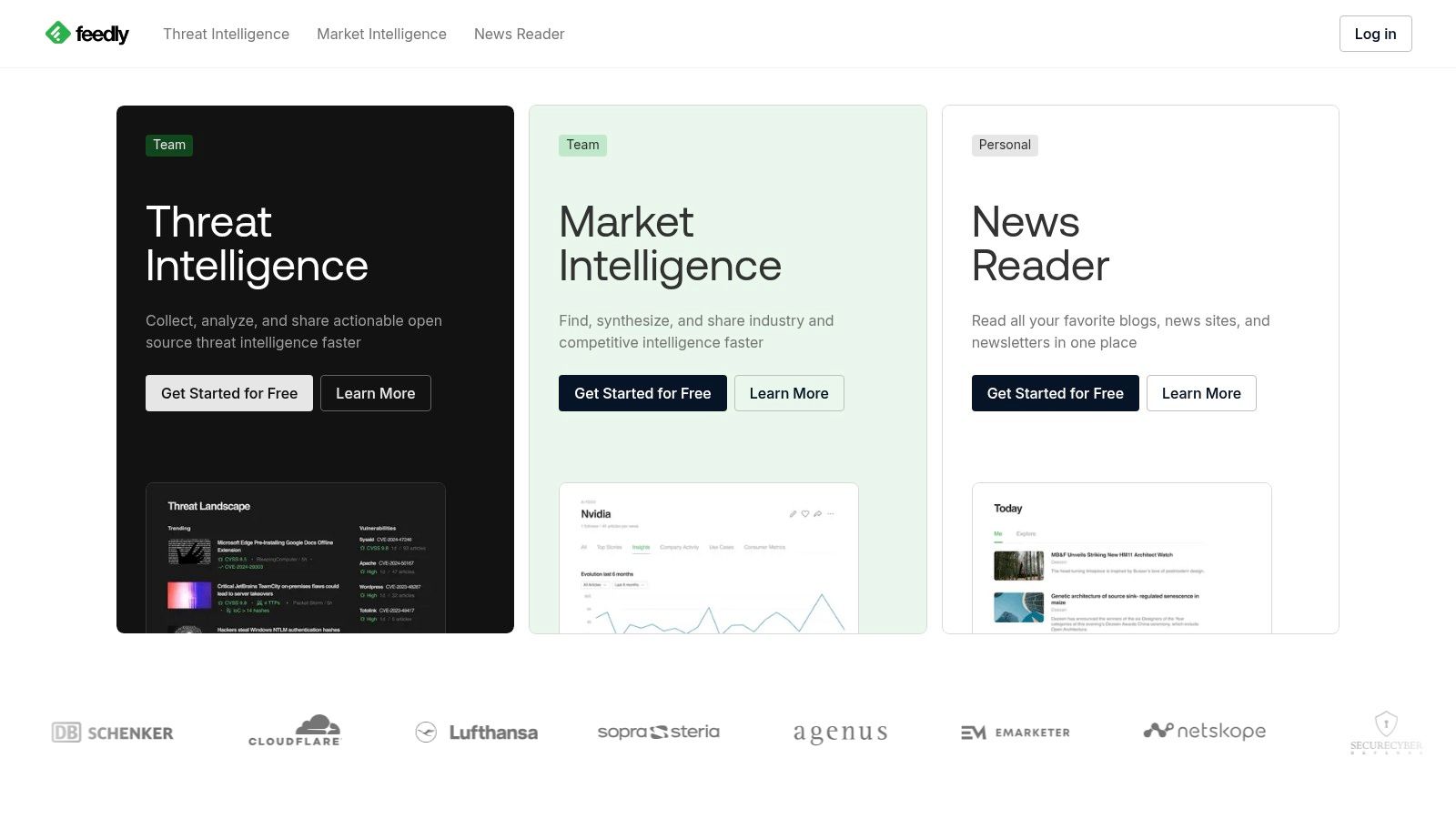
Feedly turns a news aggregator into a powerful monitoring tool with its AI engine, Leo. Instead of getting every article from a source, you train Leo to prioritize topics and filter out noise. This makes it one of the best Google Alerts alternatives for cutting through the clutter.
You can follow specific publications, blogs, and keyword alerts, then apply AI skills to filter the results. For example, create a "competitor" feed and teach Leo to only show you articles about new funding rounds or product launches.
Core Features & Use Case
We use a Feedly Pro+ plan to track emerging trends in marketing tech. We’ve trained Leo to prioritize articles mentioning "AI in SEO" and "startup growth hacks" while filtering out job postings. This gives us a curated intelligence feed that informs our content strategy without the noise.
- Best For: People who prefer a curated feed over a stream of email alerts and want AI to do the filtering.
- Pricing: Pro+ starts at $12/month (billed annually).
- Unique Offering: Its AI engine, Leo, acts as a personal research assistant to dramatically reduce noise.
Our Take: Feedly is the thinking person's monitoring tool. It takes some setup to train the AI, but the payoff is a highly relevant, noise-free intelligence stream that email alerts can't match.
Pros and Cons
- Pros: Familiar feed-based interface, powerful AI for reducing noise, and cost-effective for solo users.
- Cons: Not a classic social media monitoring tool at lower tiers; more focused on news and blogs.
The real power is Leo's ability to rank information. You can learn more about how AI ranks social media alerts by importance to understand the tech.
Learn more at: https://feedly.com
Top 12 Google Alerts Alternatives — Feature Comparison
| Tool | Core coverage | Key features | Target audience | Price / Value | Differentiator |
|---|---|---|---|---|---|
| BillyBuzz — Recommended | Reddit-focused (hundreds of subreddits; ~15min scans) | Context-aware AI relevancy; real-time Email/Slack/Discord alerts; AI reply suggestions; competitor intel | Startups, founders, growth & marketing teams | Starter ~$19/mo → Scale ~$99/mo; free trial + 30-day money-back | Website-driven keyword discovery; Reddit-first AI scoring; SEO upside from high-ranking replies |
| Talkwalker Alerts | Web, blogs, forums, Twitter/X | Free email alerts; frequency & language filters | Individuals and teams needing quick, free coverage | Free | Simple Google Alerts replacement; fast setup |
| Mention | Web + major social, news, forums, reviews | Real-time monitoring; Boolean & sentiment; team workflows & integrations | Brands and teams needing broad monitoring & reporting | Paid (team pricing) | Built-in analytics and team collaboration |
| BrandMentions | Web, news, blogs, forums, social | Hourly/daily updates; AI sentiment; white-label reporting | SMBs and agencies | Transparent quotas; tiered plans | Clear mention limits and white-label options |
| Awario | Web and major social networks | Boolean queries; data export; PDF/white-label reports; API on higher tiers | Startups and small teams wanting control | Competitive pricing; free trial | Strong Boolean control and good value vs enterprise |
| BuzzSumo (Alerts) | Content, backlinks, competitors, journalists | Alerts for brand/keyword/backlink/journalist mentions; Slack integration | Content, PR and outreach teams | Premium (alerts limits by plan) | Journalist discovery and PR-focused workflows |
| Ahrefs Alerts | Web mentions + SEO (backlinks, rankings) | Backlink gain/loss; web mention alerts; ranking change notifications | SEO and link/PR teams | Requires Ahrefs subscription (no standalone) | Deep SEO/link data integrated with alerts |
| Semrush Brand Monitoring | News, blogs, discussions (Semrush App) | Sentiment, share-of-voice, trends | Semrush users and agencies | App add-on cost on top of Semrush plan | Seamless Semrush integration and competitive metrics |
| Brandwatch Consumer Research | Global social (including Reddit), large data firehoses | Real-time signals; multi-language sentiment; dashboards & exports | Enterprise-level consumer intelligence teams | Quote-based enterprise pricing | Massive data coverage and AI-driven analysis |
| Meltwater | Online news, social, broadcast, print | Real-time alerts; dashboards; broadcast/print add-ons | PR teams and enterprises | Quote-based pricing | Broadest media coverage plus professional services |
| Sprout Social (with Listening) | Social platforms + keyword/location monitoring | Unified inbox; scheduling; optional advanced listening | Social teams needing publishing + monitoring | Per-seat pricing; 30-day trial | All-in-one social management with monitoring |
| Feedly (Pro/Market Intelligence) | RSS/news sources; selected social & feeds via AI | AI (Leo) prioritization; team boards; automated newsletters | Individuals and market/competitive teams | Pro/Pro+ affordable; Market Intelligence premium | Feed-based workflow with AI noise reduction and teams support |
Our Final Recommendation: How to Choose Your Next Alerting Tool
You've seen the options, from free upgrades to enterprise platforms. The choice gets simple when you ask one question: Are you playing defense or offense?
Are you protecting your brand reputation, or are you trying to acquire customers? Your answer changes everything.
Defensive vs. Offensive Monitoring: Define Your Goal
If you're playing defense, you need a reliable system for tracking brand mentions, backlinks, and potential crises.
- For basic tracking: Talkwalker Alerts is the best free step up from Google. It's more reliable, covers more sources, and costs nothing.
- For brand health metrics: Paid tools like Mention or BrandMentions give you the analytics and sentiment analysis you need to report on brand perception.
- For SEO defense: Ahrefs Alerts or Semrush's Brand Monitoring are essential for tracking backlinks and competitor SEO moves.
But if you're playing offense, you're not just listening—you're hunting for opportunities. You need to find high-intent conversations where customers are looking for a solution. This is about lead generation, not just brand management. This is why we built BillyBuzz.
Our Internal Stack at BillyBuzz: A Growth-Focused Approach
We run a dual stack to cover both offense and defense. This is the most effective setup for a growing startup.
Offense (Customer Acquisition): BillyBuzz
Our primary goal is finding new customers. We use our own tool, BillyBuzz, to monitor high-value subreddits liker/SaaS,r/startups, andr/ProductManagement. Our alerts are set for keywords like"customer feedback tool","NPS alternative", and competitor names paired with"alternative to". The real-time Slack alerts let us jump into threads within minutes, provide genuine value, and organically introduce our solution. This is proactive growth, not passive listening.Defense (Brand & SEO): Ahrefs Alerts
For defense, we rely on Ahrefs Alerts. It's non-negotiable for our SEO. We get instant notifications for new backlinks (so we can thank the author), track our brand mentions on high-authority blogs, and monitor when competitors get big links. This protects our online footprint and keeps us ahead on the SEO front.
Actionable Steps to Make Your Choice
Moving beyond Google Alerts is a strategic decision. Here's how to make it:
- Step 1: Define Your Goal. Leads (offense) or reputation (defense)? What's your #1 priority right now?
- Step 2: Find Your Channels. Where do your customers live? Twitter, Reddit, forums, news sites? Don't pay for a tool that's strong where your audience isn't.
- Step 3: Evaluate Speed and Signal. How fast can the tool deliver a high-intent conversation to you? How well does it filter out noise? For growth, real-time is non-negotiable.
- Step 4: Start a Trial. Every paid tool on this list has a free trial. Use it. Set up alerts for your most important keywords and compare the quality of the results. For those exploring further alternative options, you might also consider investigating the general offerings of the copycat247 platform.
The conversation is moving too fast to just monitor mentions. The best google alerts alternatives don't just tell you what happened; they empower you to act on what's happening now. Choose the tool that closes the gap between insight and action, and you'll turn monitoring from a chore into a growth engine.
Ready to stop passively monitoring and start actively growing? BillyBuzz was built for founders and marketers who need to find customers, not just mentions. It filters out the noise from Reddit and delivers high-intent leads directly to your Slack in real-time. See how we turn conversations into conversions by trying BillyBuzz today.